
Trading platform & site functionality
Tradewell.io is a WordPress site built with the Kadence theme and Elementor page builder. It presents itself as a business hub offering everything from card machines and point‑of‑sale solutions to electricity contracts, loans, and even a page about crypto copy‑trading. This breadth of unrelated verticals—payments, energy switching, lending, and speculative trading—appears on the same generic build with a Tawk.to live‑chat widget and numerous standard plugins. The result looks less like a specialized, well‑regulated firm and more like a broad data‑capture portal designed to attract inquiries in multiple high‑commission niches.
The on‑page structure is a patchwork: pages such as “card machine,” “electricity contracts,” “loan,” “business lounge,” and “bitget copy trading” sit alongside a blog shell and affiliate registration logins. There is little technical depth about pricing schedules, KYC rules, APRs for credit products, card‑acquirer contracts, interchange, or energy tariff details—topics a legitimate provider would disclose clearly. Instead, the site leans on generic headlines and imagery, including third‑party logos, without matching those visuals to firm, verifiable partner statements. Combined with the live chat’s front‑and‑center presence, this feels like a funnel first and a service later—if at all.
Quality‑control and security signals are also poor. The site serves multiple assets over plain HTTP, creating mixed‑content conditions that no credible payments intermediary or finance broker should tolerate. Operationally, it loads numerous third‑party scripts (Cloudflare analytics, wsimg traffic scripts, Tawk chat), yet provides little documentation on how sensitive business or personal data will be handled after submission. For users evaluating spreads, fees, or service levels, there are no concrete schedules to read, no standardized contracts to preview, and no sandbox or demo account for any proposed trading functionality—because, in practice, no native trading platform is offered here at all.
License & regulatory status
When a website claims, implies, or appears to procure regulated services—such as credit broking, merchant acquiring, or investment exposure—it must show who is responsible and on what regulatory basis. Tradewell.io offers business loans and card machines (activities usually overseen by authorities like the FCA in the UK or equivalent national regulators), pitches energy switching that would require legitimate supplier or broker arrangements, and references crypto copy‑trading that in many jurisdictions triggers enhanced compliance. Across the pages we reviewed, we found no regulator license numbers, no company registration, no supervisory disclosures, and no risk statements adequate for investment‑related activity.
We searched for any obvious claims of authorization by named regulators (FCA, BaFin, CONSOB, ASIC, FINMA, or the CFTC/NFA) and found none on the pages loaded. Importantly, not claiming authorization does not absolve an operator if its activities inherently require oversight and consumer protections; it merely means customers are left outside the regulatory safety net. Without a visible legal entity to check against public registers, we could not independently verify any licensing. In line with the pattern, there is no clear complaints process or Financial Ombudsman/ADR pathway described—another tell that you would be dealing with an unregulated setup.
User feedback
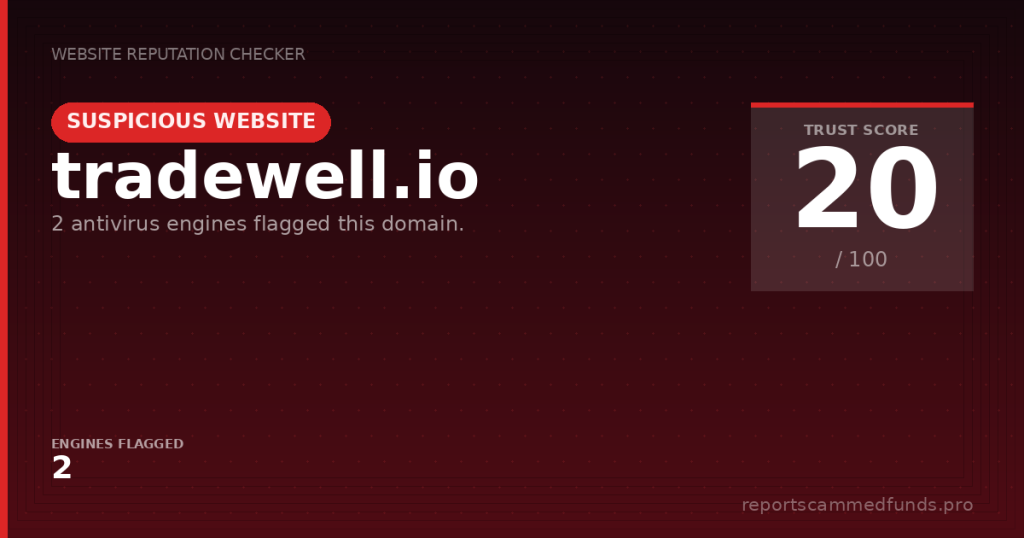
Public, verified feedback is scant—an absence that matters for any platform that wants to broker your energy, payments, finance, or trading exposure. The site’s footprint suggests a relatively young or recently repurposed domain with low independent recognition, which is inconsistent with the mature, multi‑vertical capability it tries to project. Where third‑party monitors track site reputation, the domain is classed as a suspicious website. The mismatch between grand claims and minimal, traceable user outcomes is a classic red flag in our case files.
On platforms where low‑signal commentary does exist for look‑alike operations, complaint themes repeat: withdrawal blockages once customers try to retrieve funds; bait‑and‑switch into riskier products; last‑minute, surprise KYC that is used to stall payouts; or being re‑routed to “partner” firms with entirely different legal terms. While we cannot attribute those specific allegations to Tradewell.io without more evidence, the risk profile is strikingly similar. The combination of aggressive live chat, vague product detail, and no licensing transparency is a configuration we see again and again in boiler‑room funnels.
Deposits & withdrawals
Tradewell.io does not prominently publish a schedule of accepted payment methods, client money handling procedures, or withdrawal timelines. On sites like this, users are often nudged—through chat or calls—to pay application fees, make deposits via card or bank transfer to newly introduced accounts, or, in crypto‑related pages, to send digital assets to third‑party wallets “to activate” a strategy. Once funds are off your card or out of your bank, clawing them back becomes difficult, and crypto transfers are typically irreversible. The conspicuous lack of transparent fees, client accounting segregation, transaction dispute process, or withdrawal SLAs should be taken as a strong warning: do not send any money or documents here.
Why unregulated brokers are risky
Using any unregulated website for financial, payments, or crypto services exposes you to significant, avoidable risk. There is no capital adequacy oversight, no complaints adjudicator, no compensation scheme, and no standardized conduct to prevent mis‑selling or fund commingling. If a dispute erupts, the operator can simply stop responding, change contact channels, or route you to a different brand; you’re left with chargeback and law‑enforcement routes as your only remedies. When a site presents multiple regulated‑style offerings without the licensing to match, it is safer to assume the worst and protect your capital and identity.
How to get help if you’ve been scammed
If you already paid or shared sensitive information with Tradewell.io, act immediately. Contact your bank or card issuer and request a chargeback or dispute on any recent payments, citing misrepresentation and an unregulated provider; for wire transfers, ask for a recall (speed matters). If crypto was sent, record the transaction hash and file a report with your local cybercrime unit (IC3.gov in the U.S., Action Fraud in the UK) and your national financial regulator (e.g., FCA, ASIC, BaFin). Preserve all chats, emails, invoices, and wallet addresses as evidence. For hands‑on support with evidence packaging, regulator reporting, and recovery strategy, you can reach our team at reportscammedfunds.pro—we review cases daily and can advise on next steps tailored to your jurisdiction.
Conclusion
Tradewell.io presents a risky blend of services that normally require strict oversight, yet the site provides no verifiable licensing, no corporate transparency, and weak technical hygiene. It has the fingerprints of a lead‑farming or pressure‑sales funnel rather than a compliant provider, and it has already been categorized as a suspicious website by automated reputation checks. Our recommendation is unambiguous: do not engage, do not deposit, and do not share documents. Seek reputable, regulated providers for any card acceptance, lending, utilities brokerage, or investment activity—and verify their licenses on the official regulator’s register before you proceed.