Trading platform & site functionality
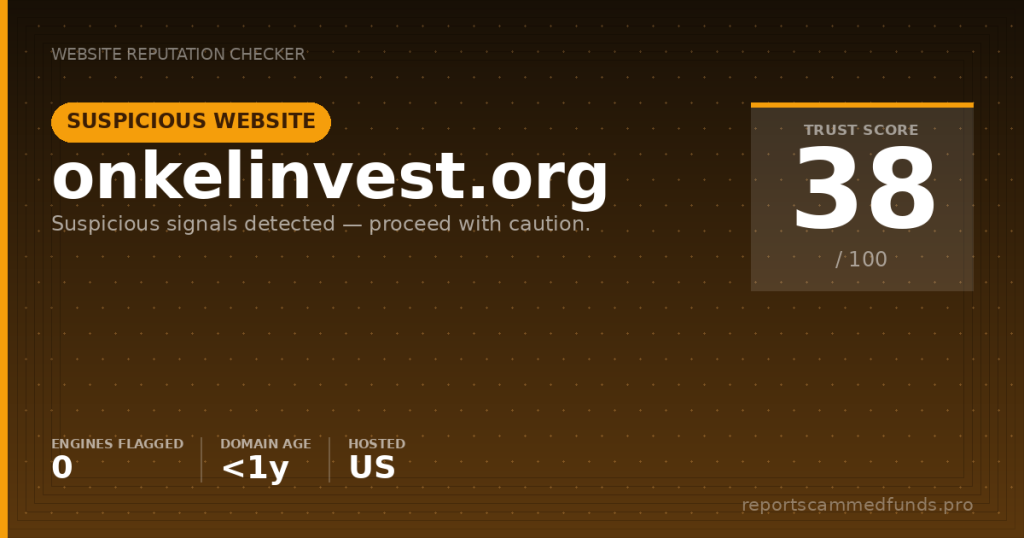
At the time of testing, onkelinvest.org immediately redirected to a standard “Account Suspended” page, a template typically served by cPanel/LiteSpeed environments behind Cloudflare. This means we could not properly evaluate any product pages, pricing, account tiers, or platform demos the operator may claim to offer. In practical terms, there was no usable front end — no onboarding flow, no legal documents, and no disclosures. When a site is essentially offline, it makes due diligence impossible and places all the burden of proof on the operator to restore service and present transparent information.
Despite the lack of live content, metadata and technical traces suggest a broker-flavored WordPress build, likely assembled with Elementor and standard libraries like Font Awesome, and instrumented with Cloudflare’s browser beacons. Those are common building blocks for many marketing sites and are not inherently bad, but they do indicate a template-heavy approach rather than a purpose-built trading platform stack. There was no evidence of industry-grade terminals such as MT4 or MT5, nor was any web-trader interface accessible during our review. Without a working portal, we cannot verify claims around spreads, execution quality, charting capabilities, or asset coverage.
A healthy investment site, even at an early stage, ordinarily offers a minimum set of trust elements: full company name and registration number, a serviceable contact address, risk warnings, client agreement documents, and a privacy policy that names the data controller. We found none of that on the suspended page, and the domain’s young age compounds the opacity. If OnkelInvest intends to position itself as an investment or forex provider, it must restore the site and add detailed product, fee, and risk disclosures that can be independently verified.
Cloudflare fronting is a neutral technical choice used across the web, but a suspended destination beneath that layer signals unresolved back-end issues — whether billing, abuse takedown, or operator neglect. For a business that would hypothetically safeguard client deposits, operational continuity matters. The current state offers no assurance that client accounts would be accessible or that the operator could maintain service-level obligations. Until the site returns with verifiable, regulator-aligned content and a functioning platform, users should treat it as high-risk and refrain from providing any personal or payment data.
License & regulatory status
Because onkelinvest.org is suspended, we could not locate any live regulatory statements, license numbers, or legal-entity disclosures. Our standard checks did not uncover a publicly verifiable authorization with major market regulators, and the WHOIS privacy shield obscures the operator’s identity. In regulated finance, the absence of a named company entity linked to an issued license is a serious deficiency. Put plainly, there is no evidence that OnkelInvest is authorized to solicit investments or execute trades for retail clients in any jurisdiction.
Prospective clients should expect to see regulator references such as an FCA FRN in the UK, BaFin authorizations for Germany, an ASIC AFSL in Australia, or NFA/CFTC registrant IDs for the United States. Each of these can be cross-checked directly on the regulator’s public register to confirm scope, status, and any disciplinary actions. In the EEA, MiFID permissions through a national competent authority are essential for cross-border investment services. Without such transparent credentials, any promise to provide forex/CFD services is likely outside the law and leaves customers without the protections those regimes enforce.
We also did not encounter credible third-party attestations — for example, audited financial statements, named custodians, or banking partners — that would normally support a firm’s compliance posture. A non-functional website cannot rely on private claims made over messaging apps or sales calls to stand in for regulated disclosures. If the operator later publishes license references, users should verify them independently on the regulator’s website. Merely stating “regulated” or displaying generic seals is not enough; exact authorization numbers and matching legal entity names are required.
To be clear, we have not seen a specific public warning uniquely naming OnkelInvest from agencies like the FCA, CONSOB, BaFin, ASIC, or FINMA at the time of writing. That said, the absence of a warning is not an endorsement; many unlicensed operations never appear on alert lists before losses occur. The decisive factor is the lack of disclosed, verifiable authorization and the site’s current inaccessibility. Until OnkelInvest can evidence proper licensure and a functioning platform, the regulatory risk remains unacceptably high.
User feedback
Public feedback about onkelinvest.org is sparse to non-existent, which is unsurprising given the domain’s youth and suspended state. We could not locate reliable user forums or independent review threads describing real trading experiences, customer support interactions, or payout histories for this brand. In the absence of verifiable testimonials, the safest assumption is to expect zero track record until proven otherwise. Anonymous praise snippets on social media or transient messaging groups carry little probative value, as they are easy to fabricate and difficult to audit.
Our caseload over the years with similar young, broker-styled websites shows recurring complaint themes that readers should watch for if they’ve already interacted with OnkelInvest. The most common are withdrawal blockages after initial profits, surprise KYC checks introduced only after a withdrawal request, pressure to deposit more to unlock alleged ‘VIP tiers,’ and claims that additional ‘taxes’ or ‘compliance fees’ must be paid upfront before funds can be released. Managed-account pitches are another red flag — users hand control to a ‘senior analyst’ who rapidly churns the account into losses while asking for fresh capital to ‘recover’ positions.
Communication patterns also matter. Aggressive outreach over WhatsApp, Telegram, or unsolicited calls, coupled with reluctance to communicate over traceable corporate email channels, is a hallmark of boiler-room style operations. Similarly, screenshots of profits or trading dashboards that cannot be accessed through a stable, authenticated web portal are often staged. If you have seen any of these patterns in contact with the operator behind onkelinvest.org, treat them as early warning signs of a high-risk engagement, even if no money has changed hands yet.
If legitimate user stories emerge later — for example, verified account statements showing smooth withdrawals and a bona fide regulator authorization — we will update our stance. Until then, silence is not a virtue; it’s simply a lack of evidence. Readers can help each other by documenting dates, amounts, contact names, and payment channels if they have already engaged, and by filing reports with their local authorities. Early documentation greatly improves the chances of successful recovery or at least containment of further losses.
Finally, beware of the secondary danger: recovery scams. After initial losses, victims are often approached by ‘investigation firms’ or supposed regulators who promise to unfreeze funds for an advance fee. These are almost always fake. Do not pay anyone upfront to retrieve losses, do not give remote desktop access, and do not share seed phrases or authentication codes. Use only trusted channels like your bank, law enforcement, relevant regulators, and known consumer-protection services to seek assistance.
Deposits & withdrawals
Because the live site is unavailable, we could not confirm what deposit methods OnkelInvest accepts. New, lightly documented investment sites commonly ask for card payments, bank wires, or cryptocurrency transfers. Each carries a different risk profile. Cards offer the potential for chargeback if you act quickly; wires can be harder to recall once routed through multiple beneficiary accounts; and crypto is typically irreversible and highly favored by fraudulent operators precisely because it cannot be clawed back easily.
Withdrawal friction is the single most salient theme in user disputes with unregulated platforms. Even where portals exist, we often see patterns like minimum trade-volume hurdles, arbitrary ‘profit verification’ delays, or the sudden appearance of unpaid ‘taxes’ that must be remitted to a non-government wallet before a payout can be approved. None of these conditions are consistent with regulated broker practices. Legitimate firms do not demand taxes in advance; they report client activities and withhold where applicable under clear legal frameworks.
Another friction tactic involves escalating KYC demands after a customer requests a withdrawal — sometimes including repeated submissions of the same documents or requests for notarized letters with unusual wording. KYC itself is legitimate, but weaponizing it to delay or wear down customers is not. The key test is proportionality and clarity: are the requests aligned with known AML standards, and do they come from an identifiable compliance department using official corporate channels? With OnkelInvest’s site suspended, there is no way to review its policies or contact a compliance team.
If you already deposited, minimize exposure now. Stop further payments, gather all records (emails, chat logs, transaction receipts, wallet addresses, bank statements), and take timestamped screenshots of any account pages you can still access. Contact your card issuer or bank promptly to discuss a chargeback or recall, citing suspected misrepresentation if applicable. If you used crypto, prepare the transaction hashes and addresses for tracing; while recovery is difficult, the data can support law-enforcement work and help blockflows into known laundering hubs.
Prospective users should pause all plans to fund any account until OnkelInvest provides a restored, fully documented website with clear, regulator-aligned terms and a demonstrated withdrawal track record. An operationally unstable site is simply not the place to park cash. The risk-to-reward ratio is skewed dramatically when even basic due diligence steps — reading a client agreement, checking fees, or verifying the company name — are impossible.
Why unregulated brokers are risky
Engaging with an unregulated investment site removes the safety net that most retail customers take for granted. Without oversight by authorities like the FCA, BaFin, ASIC, the CFTC/NFA, or national EU regulators under ESMA, there is no capital-adequacy regime, no mandated segregation of client money, and no enforceable complaint mechanism. If the operator disables your account or vanishes, you are left to pursue a private civil claim, often across borders and secrecy jurisdictions, with slim odds of recovery.
Regulated brokers are bound by strict conduct rules: fair marketing, transparent pricing, best execution policies, detailed risk warnings, and clear dispute-resolution channels. When a site bypasses all of this, it can set any rules it likes, from withdrawal penalties to artificial ‘volume requirements’ designed to trap deposits. The absence of a competent supervisor also emboldens the use of aggressive sales tactics and pseudo-expert recommendations that would never clear compliance review at a reputable firm.
The operational state of onkelinvest.org compounds those risks. A suspended website suggests resource constraints or unresolved abuse reports — neither of which inspires confidence about how client funds would be handled. Even if a site returns online, that alone does not prove compliance. Investors should look for regulator-issued licenses tied to a named legal entity, recognizable banking partners, clear client-money arrangements, and independent reviews that document real, successful withdrawals over time.
There is a broader cybersecurity angle as well. Unstable or hastily assembled sites may leak personal data, mishandle KYC documents, or expose login credentials through poor security practices. In the worst case, your identity data can be harvested and repurposed for further fraud. The safest course with unregulated and unverified operators is simple: don’t share documents, don’t transfer funds, and don’t install any remote-support tools or browser extensions at their request.
How to get help if you’ve been scammed
If you have already paid money to onkelinvest.org or shared personal data, act quickly. Contact your card issuer or bank immediately and describe the situation; ask whether a chargeback, dispute, or recall is possible. Be specific: mention any misleading claims, blocked-withdrawal experiences, or demands to pay ‘taxes’ upfront. If you used a wire, ask your bank to send a recall request; while not guaranteed, speed improves the odds. For crypto payments, compile transaction hashes and wallet addresses — they form the starting point for any tracing effort.
Report the incident to the relevant authorities in your jurisdiction. In the United States, file a complaint with the FBI’s Internet Crime Complaint Center (IC3). In the United Kingdom, report to Action Fraud. If you are in the EU, notify your national regulator and consumer-protection body; ESMA maintains links to national competent authorities. These reports not only support your case but also help authorities spot patterns across multiple victims and take coordinated action.
Preserve all evidence. Save emails, chat transcripts, call logs, screenshots of the site and any account areas, bank receipts, and crypto transaction data. Create a simple timeline of events — dates of contact, deposit amounts, withdrawal attempts, and names or handles used by representatives. This makes it far easier for your bank, regulators, and investigators to understand what happened and to escalate appropriately.
For hands-on guidance, you can also reach our team at reportscammedfunds.pro. We review cases, help victims structure documentation for banks and regulators, and advise on avoiding secondary ‘recovery scam’ approaches. We will never ask for upfront payment to ‘unlock’ funds or request remote access to your device. If your case aligns with our criteria, we can coordinate next steps with your financial institution and, where appropriate, point you to specialized legal or investigative resources.
Regardless of the path you choose, do not send additional funds to anyone promising expedited recovery, and do not comply with demands for prepayment of ‘taxes’ or ‘compliance fees.’ Those are classic hallmarks of advance-fee fraud layered on top of an initial loss. Stick to official channels and credible, documented assistance.
Conclusion
On the evidence available, OnkelInvest is not ready for user trust. The website is suspended, there are no accessible legal or regulatory disclosures, and the domain is very new and privacy-shielded. None of that proves malicious intent, but all of it deprives you of basic assurances you should insist on before depositing a cent. Until the operator restores the site with full, verifiable company details and proper licensing that can be checked against official registers, the prudent course is to avoid engagement.
If you encounter sales outreach claiming guaranteed returns or ‘exclusive opportunities,’ treat it as a red flag. A legitimate broker will provide regulator-issued authorization numbers, a full suite of legal documents, clear fee schedules, and a functioning platform subject to oversight. OnkelInvest, as currently presented, offers none of that. The risk-reward profile is unacceptable for retail users.
We will monitor the domain for changes. Should the operator publish evidence of licensing, a functional platform, and a transparent legal entity, we will reassess. Until then, protect your funds and your personal data by steering clear, and rely on established, regulated providers whose credentials you can confirm directly with authorities.