Trading platform & site functionality
On presentation, myblacktree.com positions itself as a one-stop shop spanning luxury watches, electronics, shoes, clothing, and even household categories such as kitchen, garden, and underwear. That breadth of inventory is common to dropship aggregators and clone-store networks, which often rely on templated product imports rather than a focused catalog. The site appears to run on a hosted e-commerce stack consistent with Shopify themes, with a set of standard scripts for analytics and marketing. While such infrastructure can be perfectly legitimate, it does not substitute for a traceable merchant identity, and the absence of a visible company imprint leaves a significant gap for consumers assessing risk.
The promotional hooks center on discounts and quick checkout, with messaging that emphasizes deal urgency. Luxury watch pages reportedly list reductions that, if genuine, would undercut authorized dealers by implausible margins. Whenever premium labels are offered at deep, non-seasonal discounts without the merchant naming its authorized status or warranty channel, the risk of grey-market stock or outright counterfeits rises sharply. Clear, specific details about manufacturer warranties, service centers, and serial number verification should be present on pages for high-value goods; we did not find such disclosures tied to a named legal entity.
The technical footprint suggests common retail plug-ins such as Google Tag Manager and social pixels, which are widely used for ad attribution. Those tools are not problematic on their own; many reputable stores deploy them. The concern is that marketing polish can create a superficial sense of legitimacy in the absence of fundamentals like a physical address, registered business number, and a reachable support line. We also noted intermittent accessibility during checks, which makes it hard to evaluate cart flow, payment options, and post-purchase policy pages that would ordinarily help consumers validate a store.
License & regulatory status
This is a retail site, not a financial broker, so capital-markets licenses (FCA, ASIC, BaFin, CFTC) are not applicable. However, consumer-protection and e-commerce disclosure laws do apply in many jurisdictions. For example, the UK Consumer Contracts Regulations and the Consumer Rights Act require clear identity and returns information; the EU E-commerce Directive mandates an imprint with the service provider’s name, geographic address, and contact details; and in the United States, the FTC’s Mail, Internet, or Telephone Order Merchandise Rule sets timeframes for shipping or refunding. Our review did not locate a conspicuous legal imprint naming the responsible company, which is a core expectation under these frameworks.
Separate from general consumer law, retailers advertising brand-name products typically need to be either authorized dealers or to disclosure warranty limitations for grey-market imports. If myblacktree.com is an authorized seller, it should publish specific brand authorizations, service and returns channels, and the origin of manufacturer warranties. Absent those details, buyers risk receiving items that brands will not service or authenticate, a dynamic that commonly surfaces in disputes about luxury watches and premium electronics. Clear, verifiable statements reduce that risk; their absence increases it.
We searched for explicit regulatory warnings and did not find any entries in financial regulator noticeboards, which is unsurprising for an online store. Consumer-protection agencies occasionally list problematic e-commerce domains, but such databases are uneven and jurisdiction-specific. What matters more here is the lack of corporate transparency on the site itself and the difficulties in confirming contactable ownership. When combined with at least one external reputation flag and aggressive discounting, the regulatory picture leans toward caution even without a formal blacklist entry from a government body.
User feedback
Public, independent customer feedback is thin to non-existent. We did not find a robust trail of third-party reviews tied to verified purchases on major platforms where the seller is clearly identified by legal name. Social media claims of verification and promotional pages may exist, but cross-linking that proves control between the domain and the social account owners is not obvious. This vacuum of attributable, positive order outcomes is a risk signal for a store claiming to ship premium goods at scale.
Complaint patterns for similar multi-category discount shops typically revolve around non-delivery, shipment of items materially different from the listing, and immediate breakdowns in customer service once payment is taken. Another frequent theme is the presentation of tracking numbers that register in carriers’ systems but resolve to unrelated shipments or stagnant status updates, which can delay chargeback windows. Where returns are attempted, customers often report being directed to ship to undisclosed overseas addresses at their own cost, after which refunds fail to materialize or are replaced by store credit.
We treat the absence of credible, third-party critiques as a data point in itself. Legitimate new stores can start without reviews, but an operation selling high-value products at scale should accumulate verifiable testimonials, order proofs, and interactions with recognized marketplaces or trust intermediaries. The mismatch between the aspirational product set and the lack of traceable customer outcomes is material. Until a consistent pattern of successful, verified transactions appears, prudence is warranted.
Deposits & withdrawals
E-commerce payment flows on hosted platforms usually include card payments and sometimes wallets like Apple Pay or PayPal, with the processor acting as a gatekeeper for fraud controls. We could not confirm the precise methods offered by myblacktree.com within checkout, and the site’s inconsistent availability complicates validation. Where stores push bank transfers, instant transfers, or crypto payments, risk increases because chargeback and buyer-protection options are limited or non-existent. Consumers should insist on credit-card rails with robust chargeback rights when dealing with a new or unverified retailer.
Refund and return policies are equally critical to examine before purchase. A compliant policy will name the legal entity, provide a geographic return address, set clear timeframes, and explain whether original shipping is refundable and whether restocking fees apply. Non-compliant stores often use vague language, reserve the right to issue store credit only, or require returns to costly overseas locations that make the process uneconomic. Without a fully disclosed and testable policy, you may face delays, partial refunds, or refusal once the funds have settled.
We also note a growing tactic among questionable storefronts: introducing surprise identity verification after payment as a pretext to slow refunds or deny claims. While some legitimate anti-fraud checks occur in card processing, retailers should not require scans of passports or driver’s licenses to ship ordinary goods. If a merchant demands sensitive documents post-purchase, that is a red flag for both privacy and refund friction. In all scenarios, document any interactions meticulously to support any dispute with your card issuer.
Why unregulated brokers are risky
Because an online store is not covered by investor-compensation schemes or sector-specific ombudsmen, your primary protection is contractual and tied to the payment method chosen. If a merchant is uncooperative, avenues for recourse can be limited, especially across borders. The absence of a verified legal identity and physical address magnifies this risk, as it impedes service of legal notices and makes enforcement cost-prohibitive for small claims. In effect, your leverage rests on chargeback frameworks, local consumer laws, and the goodwill of the payment processor.
Data security is another dimension of risk when dealing with opaque merchants. Checkout pages that load third-party scripts can expose shoppers to tracking and, in poorly configured environments, to skimming attacks. While established hosted platforms have strong baselines, a negligent or malicious merchant can still mishandle personal information or misuse customer emails and phone numbers. If you suspect misuse of your data, act promptly: rotate passwords, enable two-factor authentication where relevant, and monitor statements for unauthorized charges.
Finally, unverified stores that fail to deliver often become the first link in a broader chain of victimization. After an unsuccessful purchase, some shoppers are targeted by recovery scams promising refunds in exchange for upfront fees or remote-access ‘assistance.’ Others are re-targeted by lookalike stores via the same ad networks and social channels. Recognize these patterns early: no legitimate organization will demand payment to unlock a refund, and no support agent needs remote access to your device to file a chargeback.
How to get help if you’ve been scammed
If you have already paid myblacktree.com and suspect a problem, start by contacting your card issuer or bank immediately. Ask to initiate a dispute or chargeback, citing non-delivery, items not as described, or merchant misrepresentation as appropriate. Provide screenshots of the listing, order confirmations, emails, and any tracking anomalies; contemporaneous evidence strengthens your case. Act quickly because issuers enforce strict time limits on chargeback rights.
If you paid via bank transfer or instant transfer, contact your bank’s fraud department and request a recall, then notify the receiving institution with the transaction details. For crypto payments, compile the transaction hash and wallet addresses and submit a report to your local cybercrime unit; while refunds are rare, formal reports can aid de-anonymization and potential asset-freeze efforts. File complaints with relevant authorities: IC3.gov in the United States, actionfraud.police.uk in the United Kingdom, and econsumer.gov for cross-border e-commerce disputes. Local consumer-protection offices can also provide guidance tailored to your jurisdiction.
For additional guidance and hands-on triage, reach our team directly at reportscammedfunds.pro. We specialize in documenting cases, engaging payment processors, and coordinating with regulators, and can help you avoid common pitfalls such as recovery scams and evidence gaps. Use only the contact pathways listed on reportscammedfunds.pro, and avoid unsolicited ‘recovery agents’ who contact you first. The sooner you involve your bank and submit a structured case, the better the chances of a successful outcome.
Conclusion
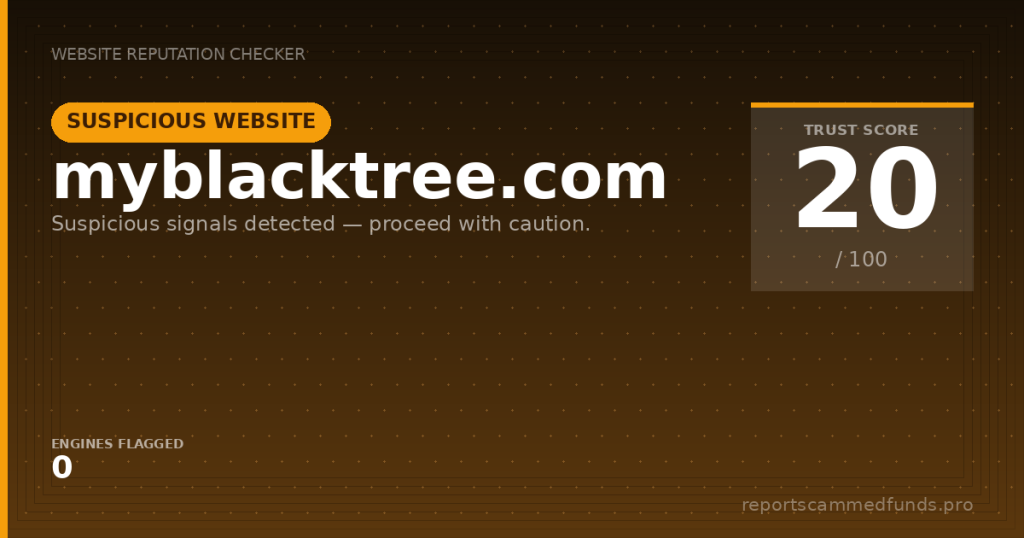
On balance, myblacktree.com presents more questions than answers. The combination of heavy discounting on premium categories, a lack of verifiable corporate identity, accessibility issues, and at least one blacklist-style reputation flag points to an elevated risk profile. While the use of mainstream e-commerce infrastructure is a modest positive, it does not meaningfully offset the missing fundamentals that informed shoppers should demand. In short, caution is the correct posture.
If you are still considering a purchase, insist on verification steps before sending any money. Look for a full company name, registration number, and physical address that can be matched to corporate registries, then confirm a working telephone line answered under the same name. Request written confirmation of brand authorization and warranty handling for any premium goods, and read the returns policy line by line, including who pays for return shipping and where items must be sent. If the merchant cannot supply this information promptly and coherently, walk away.
Our recommendation is to avoid transacting with myblacktree.com until it publishes clear, verifiable disclosures and accumulates a track record of successful, independently reviewed deliveries. If you have already paid, move quickly to protect your rights using the steps noted above and contact reportscammedfunds.pro for case support. Your best defense is proactive due diligence and disciplined payment choices — and in this instance, the safer choice is to sit it out.