
Trading platform & site functionality
What Luzo does on the surface is straightforward: it markets short‑term consumer loans to residents of Spain and provides a web‑based calculator so prospective borrowers can adjust loan amounts and durations. We saw the page load a configuration from an API endpoint (api.luzo.es) labelled for a calculator, which typically powers the interest and installment estimates. The interface itself is built as a single‑page application using Nuxt (a Vue.js framework), which is a modern, performance‑friendly approach for consumer finance landing pages.
From a delivery perspective, the site is fronted by a content delivery network and serves a valid TLS 1.3 certificate issued through a mainstream provider, which is consistent with best practice. Static assets like icons and hero images load from the same domain path prefix (_nuxt), and typography comes from Google Fonts via fonts.googleapis.com and fonts.gstatic.com. We also observed a third‑party cookie‑consent script sourced from termsfeed.com, indicating an effort to handle consent banner logic consistently and to surface controls to the user.
In terms of platform quality, our snapshot did not expose broken routes or obvious performance bottlenecks, and the network logs showed sane caching behaviors for static assets. A session‑analytics and error‑monitoring client posts envelopes to a Sentry server on a domain separate from Luzo; this is common in scalable web stacks but means usage and error metadata may be processed off‑site. If you are privacy‑sensitive, review the brand’s cookie policy and privacy notice to understand what data might be collected during a loan simulation or application.
License & regulatory status
Consumer‑credit sites in Spain should disclose the legal company name, CIF (tax ID), registered address, and relevant authorisations or supervisory relationships. In our capture, those details were not prominent on the first‑load page, and we did not see an obvious footer ‘Aviso legal’ or ‘Información precontractual’ link to scan. This does not prove the information is missing—some sites surface it deeper in the loan flow or in a separate legal page—but it raises a due‑diligence step for any applicant: find the legal entity and verify it independently before sharing documents.
Spain’s consumer‑credit rules expect lenders to present representative cost information (for example, TAE and TIN) in advertising, along with pre‑contractual disclosures. If you engage with the calculator or start an application, make sure you can see a clear APR/TAE representative example and fee breakdowns before you commit. If the brand claims any regulatory status or membership (e.g., oversight by Banco de España through an EFC structure), cross‑check that claim by searching the public registers yourself and matching the legal entity and CIF. We could not see or verify such claims for Luzo in our snapshot, so we encourage you to verify them directly.
For completeness: this site is not a trading platform and therefore is outside securities supervision by CNMV and the derivatives‑focused leverage constraints you might see in FX/CFD contexts. However, as a lender handling personal and financial data, it remains subject to GDPR and Spain’s data‑protection enforcement by AEPD. Before submitting a loan application, it is prudent to read the privacy policy to confirm which data are collected, the lawful basis for processing, who the controllers and processors are, and how long the data are retained—especially given the presence of external telemetry.
User feedback
We did not locate a body of independent, verifiable reviews large enough to draw statistically meaningful conclusions about Luzo’s customer experience. That does not mean there are problems; it simply means public, third‑party feedback appears limited or dispersed. In the absence of broad consensus, we rely on first‑principles checks and the site’s own transparency: Is the APR disclosed? Are repayment terms and total cost itemized? Is the corporate identity and complaint channel easy to find?
For similar short‑term loan brands in the Spanish market, the most frequent complaint themes tend to be operational rather than fraudulent: delays in disbursement after approval, aggressive verification requests late in the process, or difficulty reaching support during high‑volume hours. Another recurring theme in the wider sector is confusion around representative APRs (TAE) versus individualized pricing; borrowers sometimes feel bait‑and‑switched if the personal offer diverges from the headline example. None of these themes are specific accusations against Luzo; they are simply patterns to watch for when you evaluate any lender with a light public track record.
A separate and important risk to watch for is impersonation: criminal ‘advance‑fee loan’ scammers sometimes pose as legitimate brands on messaging apps and demand upfront payments via vouchers, crypto, or instant transfers in exchange for a loan that never materializes. If anyone claiming to be from Luzo asks you to pay a processing fee before approval or disbursal, treat it as a red flag and stop immediately. Authentic lenders charge interest or fees that are disclosed and deducted according to a contract—never via off‑platform, upfront personal transfers.
Deposits & withdrawals
Because Luzo appears to be a lender rather than a broker, the relevant flows are disbursement and repayment rather than ‘deposits and withdrawals.’ A legitimate Spanish lender should disburse funds into a bank account you control and set up repayments via SEPA direct debit or card charges stipulated in the contract. You should never be asked to pay an ‘activation’ or ‘insurance’ fee by sending money to an individual or to buy vouchers; those are classic hallmarks of an advance‑fee fraud. Before accepting a loan, ask for a copy of the pre‑contractual information that shows the total repayable amount, the schedule, the APR (TAE), any late‑payment fees, and the complaint/ombudsman route. If you change your mind, check the cooling‑off period and early‑repayment terms in writing; under EU consumer‑credit rules you generally have the right to withdraw within a short window and to repay early with transparent settlement of interest.
Why unregulated brokers are risky
Entrusting personal and banking data to any site whose authorisation and legal entity are not clearly stated adds risk that is hard to quantify afterward. If a brand is not clearly supervised—or you cannot match its corporate identity to a public register—you have less recourse if service deteriorates, if data are mishandled, or if pricing diverges from expectations. Even when the brand is legitimate, opaque disclosures can leave you exposed to high effective APRs and punitive late‑payment charges that strain household cash flow. For that reason, independently validate the company behind the brand, demand written pre‑contractual information, and keep screenshots of all disclosures you rely upon.
How to get help if you’ve been scammed
If you have already paid an ‘upfront’ fee or shared card details and now suspect a scam or unauthorized charge, act quickly. Contact your bank or card issuer to request a chargeback or to block further pulls, and explain that you may be a victim of an advance‑fee or impersonation fraud. Document every interaction—screenshots, emails, and chat logs—and do not send additional payments while ‘verification’ is pending.
Report the incident to the relevant authority in your jurisdiction. In Spain, you can submit complaints about a credit institution to Banco de España’s complaints service and report fraud to Policía Nacional or Guardia Civil. If you are outside Spain, use your national cybercrime portal (for example, IC3.gov in the U.S. or Action Fraud in the U.K.) and consider notifying your data‑protection authority if sensitive data may have been misused.
If you need structured help gathering evidence and escalating the case, our team can assist. Visit reportscammedfunds.pro to open a case, and we will help you triage next steps, prepare a bank‑grade evidentiary file, and coordinate reports to the proper regulator or law‑enforcement channel. Early, methodical action increases the odds of stopping further losses and, where possible, recovering funds.
Conclusion
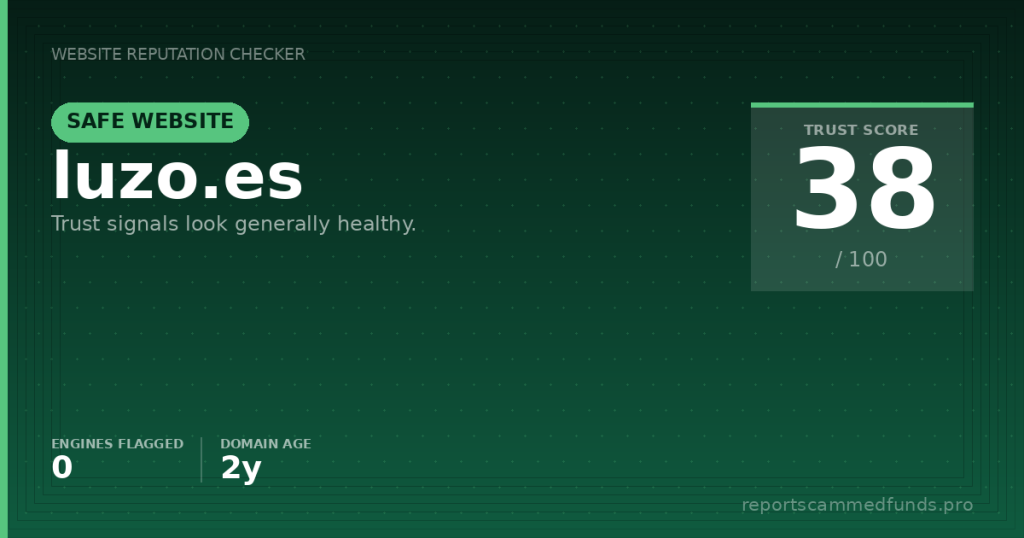
Our bottom line on Luzo: the site behaves like a professionally built Spanish lending brand with a working calculator, modern hosting, and no malware flags. Those are all positive signals. Yet we did not see prominent, easy‑to‑verify disclosures of the corporate entity and authorisation on the first‑load page, and the brand’s independent public footprint is relatively light. Before you apply, find and validate the legal entity, read the privacy and pre‑contractual terms carefully, and keep copies of the APR and fee disclosures you rely on.
If the disclosures check out and the cost of credit fits your needs, Luzo may be a usable option. If you cannot match the brand to a verifiable company with proper authorisation and complaint pathways, walk away and consider alternatives with richer transparency and a clearer regulatory paper trail. Either way, safeguard your personal data, avoid any request for upfront fees, and prefer lenders that make their legal identity unambiguous.