
Trading platform & site functionality
Lowagamb.com fronts as a crypto casino with a sleek landing page, bold headlines, and a glossy brand aesthetic. Under the hood, it appears to run on a modern JavaScript framework (Next.js), evidenced by the numerous chunked static files and app-layout bundles. The site preloads a variety of SVG and WebP assets, and it integrates custom fonts (Proxima Nova) to reinforce a high-polish look. From a pure UX standpoint, the pages load crisply through a CDN, and the interface feels like a contemporary gambling portal. However, elevators in presentation are not a substitute for licensing and verifiable operational safeguards.
On-page elements suggest a casino funnel with promotional placements (e.g., “free rewards” backgrounds) and holiday-themed overlays. The page includes tracking scripts for Facebook (fbevents.js), Twitter (uwt.js), and Cloudflare Browser Insights (beacon), which are typically used to monitor conversions and segment traffic. While common in marketing-heavy sites, these scripts tell us little about fairness, game RTPs, or whether the operation provides provably fair systems. The copy touts “blockchain-based” transparency and secure bets, but we could not find audit references, smart contract addresses, or third-party fairness attestations on the landing path we reviewed.
The site prominently styles itself as a crypto casino, implying deposits and withdrawals may be crypto-centric. That model is not unusual, yet it eliminates card-based chargebacks and can blur jurisdictional lines if a dispute arises. We did not see transparent disclosures about house edge, supported chains/tokens, or a full cashier page open to non-logged-in users. Similarly, the landing flow does not present a clear terms-of-service anchor or responsible-gaming framework consistent with regulated markets. These omissions matter when real money and identity verification are in play.
Technically, the site is mechanically sound: code-splitting, asset preloads, and content delivery through Cloudflare indicate a competent build. But reliability of a gambling platform is not just load speed; it is the availability of recourse and clarity on rules. We could not independently verify any RNG certification, operator address, dispute resolution channels, or regulator-backed guarantees. Without those, the casino’s elegant facade remains just that—a facade—until the operator discloses who they are, where they are, and under which authority they are allowed to offer gambling.
License & regulatory status
A legitimate online casino almost always displays a license number and regulator seal from jurisdictions like the UK Gambling Commission (UKGC), Malta Gaming Authority (MGA), Curacao eGaming, or national authorities in regulated markets. Lowagamb.com does not publicly present a verifiable license number, jurisdiction, or compliance page. We found no footer badges linking to a regulator’s verification page and no company registration details that match a known licensee. The lack of transparent licensing is not a trivial omission; it goes to the core of whether you are protected as a player.
Some casinos without local licenses rely on so-called offshore licensing, often in Curacao. Even those operators routinely display a license number and link to a validator portal. In this case, neither the number nor the validator link is present, and we could not independently verify any claim of authorization. If a site were truly licensed, it would be fast and advantageous for the operator to showcase the credential. The silence here is telling.
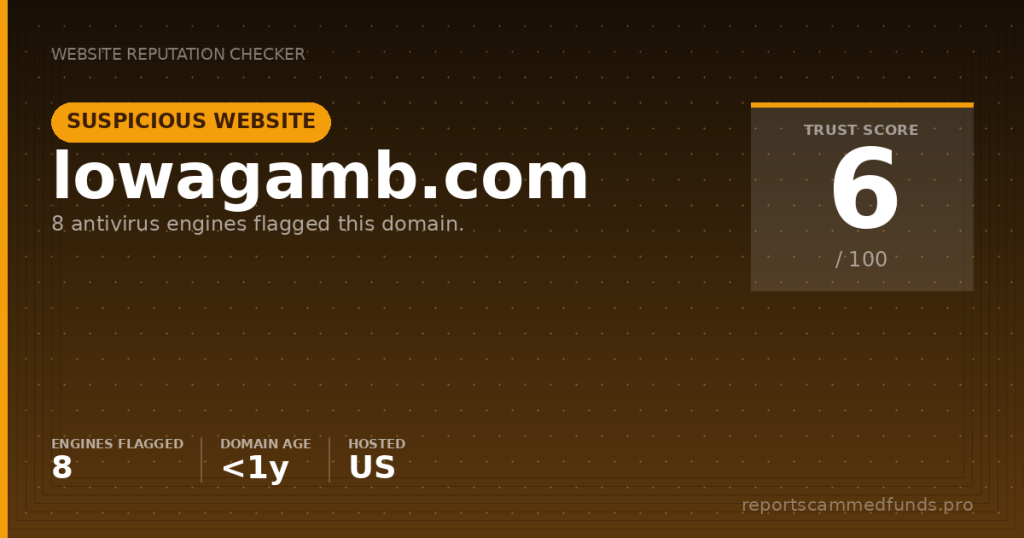
Our reputation checks also return multiple security engine flags against the domain, and the domain itself is brand new. While security-engine flags do not automatically prove wrongdoing, they deserve weight when combined with regulatory opacity. A clean, well-licensed operator—especially one in business since 2017 as claimed—should not present as a just-registered domain attracting multi-engine alerts at launch. That mismatch between the longevity claim and the registration reality is a classic hallmark of marketing over substance.
Regulatory context matters because gambling laws are strict in many countries, and regulators like the FCA, BaFin, ASIC, CONSOB, and ESMA (for financial instruments) or UKGC/MGA for gambling enforce consumer protections. Without licensing, there is no regulator to escalate disputes to, no mandated segregation of player funds, and no guaranteed auditing of the random number generator (RNG). Until Lowagamb clearly discloses and verifies its regulatory status, users should proceed as if they have no statutory safety net.
User feedback
Because lowagamb.com was only registered at the end of May 2026, there is little to no trustworthy, time-tested user feedback available. New sites seldom accumulate credible reviews, and even when comments appear early, they can be astroturfed or planted by affiliates. We have not identified a verified, independent stream of player testimonials that could validate prompt payouts, responsive support, or fair bonus terms. The absence of a track record is a risk in itself when dealing with real money.
When casino complaints do surface industry-wide, they often center on withdrawal blockages after profit spikes, surprise identity checks initiated only when a player attempts to cash out, or bonus terms that invalidate winnings on technicalities. We are not asserting those behaviors here—rather, we are underscoring the patterns we see most frequently in our case files involving young, unlicensed crypto casinos. Examples include verification loops (repeated KYC document requests), shifting payout thresholds, and long delays that outlast promo windows. These are warning patterns to watch for should you consider testing the platform.
Another recurring theme in high-risk gambling venues is unclear responsible-gaming and self-exclusion tools. Regulated casinos must provide robust account controls (deposit limits, timeouts, cooling-off periods) and publish helpline resources. Unregulated sites sometimes bury or omit those features, which can exacerbate player harm and complicate chargeback attempts. We could not confirm whether Lowagamb provides regulator-grade controls or third-party monitoring of responsible-gaming commitments.
Finally, community trust is not just about reviews—it is about operator transparency. Casinos that build sustainable reputations tend to disclose their corporate entity, postal address, and dispute-resolution framework, and they actively respond to issue threads on public forums. We did not find comparable transparency for Lowagamb at time of writing. Until a verifiable operator identity and license appear, any positive anecdotes should be balanced against the material risks documented here.
Deposits & withdrawals
The landing flow and branding strongly suggest a crypto-first cashier, though we could not see a fully detailed payments page without account creation. In crypto casinos, deposits typically involve BTC, ETH, USDT, or other stablecoins, routed through a unique wallet address. Crypto deposits settle quickly and, importantly, are non-reversible by design. If a dispute arises, you cannot ask a bank for a straightforward card chargeback the way you could with regulated, card-accepting casinos.
Withdrawal policies are the crucible where casino operators show their true colors. Well-run, licensed venues document payout timelines, identity verification steps, and per-transaction limits up front. In higher-risk operations, withdrawals can be slow or contingent on post-win KYC checks that were never emphasized during deposit. This friction is a common complaint pattern, particularly when a player’s winnings exceed ordinary amounts.
Because Lowagamb provides no visible regulator-verified framework and the site is extremely new, we have no historical signal on whether payouts are predictable or discretionary. Before depositing, you should insist on reading the full terms for withdrawal thresholds, KYC requirements, prohibited bonus strategies, and geographic restrictions. If the site requests intrusive documents after profit without having clearly stated such requirements beforehand, treat that as a major red flag.
Why unregulated brokers are risky
Gambling on an unregulated or undisclosed-license casino introduces structural risks that have nothing to do with personal luck at the tables. If the house withholds your funds unfairly, there is no regulator to adjudicate, no bond to claim against, and no independent ombudsman to escalate to. Your leverage is limited to the operator’s goodwill and whatever public pressure you can muster. Crypto’s permanence compounds the problem: once sent, funds cannot be clawed back by your bank.
Licensed casinos are required to implement anti-money laundering checks, player fund segregation, audited RNGs, and clear complaint-handling procedures. These measures are expensive and time-consuming, which is why some operators avoid them. That avoidance, however, strips players of important protections. Unlicensed venues can shut down or rebrand overnight, leaving little recourse for those with balances in limbo.
For a platform that claims a multi-year operating history, the absence of a mature public compliance footprint is striking. The mismatch between the 2017 claim and a 2026 domain registration undermines trust at the outset. Until the operator discloses and independently verifies who they are, where they are regulated, and how they segregate player funds, treat the risk of inability to recover balances as real and non-theoretical.
How to get help if you’ve been scammed
If you already deposited or lost money on lowagamb.com, act quickly. First, document everything—transaction IDs, wallet addresses, chat transcripts, emails, and screenshots of terms at the time of deposit. If you used a card or bank transfer anywhere in the flow (even to purchase crypto), contact the issuing bank immediately and ask about a chargeback or dispute; early reporting improves your odds. If you used an exchange to fund a deposit, notify the exchange’s compliance team with transaction hashes so they can flag counterparties if needed.
Report the incident to the relevant authority in your country. In the UK, file with Action Fraud; in the United States, submit a complaint to the FBI’s Internet Crime Complaint Center (IC3); in the EU, report to your national cybercrime unit or consumer authority and local police. Regulators will want your evidence package—timestamps, amounts, and communications—so keep your records organized and chronological. Do not send more money to anyone claiming they can “recover” funds for an upfront fee; that is a classic recovery scam.
For tailored support, you can reach our team at reportscammedfunds.pro. We review documentation, help you understand practical recovery steps, liaise with banks and exchanges where appropriate, and prepare regulator-ready summaries. While no one can guarantee outcomes—especially with irreversible crypto—prompt, structured action improves your position. Contact us through reportscammedfunds.pro to discuss your case safely and confidentially.
Conclusion
Lowagamb.com looks polished, but the essentials are missing: verifiable licensing, a demonstrable history under the same domain, and independent assurances around fairness and funds safety. The domain’s very recent registration and multiple engine flags put the burden of proof on the operator, not the player. A legitimate casino would make license details obvious and easy to verify, link to a regulator, and publish robust responsible-gaming controls.
Until those gaps are closed, we recommend you avoid depositing funds and refrain from sharing identity documents. If you are determined to test the waters, do not exceed a trivial amount you can afford to lose, and be prepared for verification requests that may appear only after a winning streak. Keep meticulous records and do not be pressured by limited-time bonuses that require rushed deposits.
There are many established, licensed casinos with transparent oversight, audited RNGs, and known dispute paths. Choose those instead of risking funds on a brand-new, unverified operation. If Lowagamb’s operator wishes to be considered legitimate, they should publicly disclose their licensing authority, company identity, and regulator-validated seals—until then, caution is the only rational posture.